
















Blog post

How to Break In Leather Loafers Without the Pain
Why Leather Loafers Feel Stiff at First (And Why That's Actually a Good Sign)
If you've ever slipped on a brand new pair of leather loafers women and felt that familiar tightness across the top of your foot or at the heel, you're not alone — and you haven't made a mistake. Stiffness in a new leather shoe is actually a sign of quality. Genuine leather hasn't been stretched, softened with cheap fillers, or pre-broken in by a machine. It holds its shape until it learns yours. Think of it less like a problem and more like a first introduction between your foot and your shoe.
This is especially true for loafers handmade in Turkey, where craftsmen use traditionally tanned leather that's built to last years, not seasons. That density is what makes them mold so beautifully over time — but yes, there's a short adjustment period, and we're here to help you get through it without a single blister.
The Sock Method (Your New Best Friend)
The easiest and most underrated trick? Thick socks. Put on the thickest pair you own, slide your feet into your new loafers, and wear them around the house for 20 to 30 minutes at a time. The extra volume gently pushes the leather outward, encouraging it to stretch in all the right places without any stress on your skin. Do this for two or three days and you'll notice real give, especially through the toe box and across the instep.
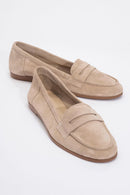
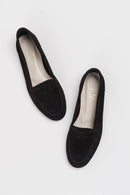
This works beautifully on every color, whether you're breaking in a cognac pair for fall, a classic black loafer for workdays, or a warm taupe or beige style you're planning to wear with everything. The leather doesn't care about the color — the method works the same.
Go Short Before You Go Long
One of the most common mistakes women make is debuting new leather loafers on a full day out. A long walk, a busy Saturday, an event that has you on your feet for six hours — these are not the occasions for footwear that hasn't been worn in yet. Start small. Wear your new loafers to run one errand. Then try them for a half day. Build up gradually, and let your shoes adapt alongside you rather than forcing the relationship.
Pay attention to where you feel pressure. The back heel is usually the first spot to cause friction. A thin heel grip or a small piece of moleskin placed inside can make an enormous difference while the leather softens. Leather balm or conditioner applied to the outside of the shoe — focusing on tight spots — can also speed things along without damaging the material.


What to Expect Once They're Broken In
Here's the part worth looking forward to: once genuine leather loafers have shaped to your foot, they fit better than almost any other shoe you'll own. The leather remembers your arch, your width, the way your toes sit. A cognac loafer that felt snug in week one will feel like it was made just for you by week three. That's the payoff for patience.
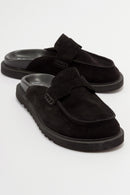
Suede loafers tend to soften a little faster than smooth leather, so if you're sensitive about break-in periods, a suede style in beige or taupe might be a gentler starting point. Smooth leather in black or cognac takes a touch longer but rewards you with a more structured, polished fit in the end.
Once your loafers have fully shaped to your feet, you'll understand why women come back to this style again and again. If you're still searching for the right pair to start with, browse our collection of women's leather loafers — each one crafted to fit beautifully and wear even better over time.
Shop This Collection


