

















Blog post

How to Break In Leather Loafers Without the Pain
Why Leather Loafers Need a Little Time
If you've ever slipped on a brand new pair of leather loafers women and winced by the third hour, you're not alone. Real leather — the genuine kind — is firm when it's fresh. It hasn't learned the shape of your foot yet. That's not a flaw. It's actually a sign that you're working with quality material that will eventually mold to you and get better with every wear. The break-in phase is temporary, but a few smart moves can make it a whole lot shorter and way less painful.
Shoes made from genuine leather, especially handcrafted styles, tend to have a denser structure than synthetic alternatives. That means they hold their shape beautifully long-term, but they do ask for a little patience up front. Think of it as the shoe getting to know you.
The Sock Trick (And Other Gentle Methods That Actually Work)
The oldest trick in the book still holds up: wear your loafers around the house with thick socks. It sounds simple, but it works by gently stretching the leather at the toe box and sides — exactly where most pinching happens. Do this for 30 to 60 minutes a day over several days, and you'll notice a real difference.
Another method that works well on leather loafers women tend to love in cognac or black is the warm air trick. Use a hairdryer on low heat for 20 to 30 seconds on the tight spots while wearing thick socks, then walk around immediately while the leather is still warm and pliable. The heat softens the fibers just enough to help them flex. Let them cool on your feet before taking them off.
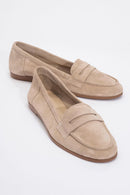
If you have a taupe or beige pair you're nervous about stretching unevenly, go slow. Leather stretching spray — available at most shoe stores — is another gentle option. Spritz lightly on the interior, wear with socks, and let the leather do the rest.
Where Loafers Usually Pinch (And How to Target Those Spots)
Most women find that leather loafers rub in a few predictable places: the back of the heel, the sides of the little toe, and sometimes across the widest part of the foot. Knowing where your problem areas are helps you focus your break-in efforts instead of just hoping for the best.
For heel rubbing, a gel heel liner is your best friend during the first week. It cushions the area that tends to blister and reduces friction while the leather softens. For side pressure — common in structured styles in black or cognac — a wooden shoe stretcher left in overnight can open things up without forcing the material.
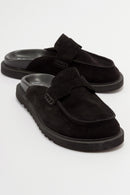
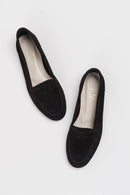
If you have a suede pair, be a little more careful with heat and moisture. Suede is more sensitive, so stick to the thick-sock method and give it more time rather than trying to rush things.


Caring for Your Leather While You Break Them In
Breaking in your loafers is also a great time to start a care routine. A good leather conditioner applied every week or two keeps the material supple, which actually speeds up the break-in process and protects the shoe for years ahead. For our handmade in Turkey styles, which are crafted with full-grain leather, conditioning from day one helps preserve the natural texture and color depth — whether that's a rich cognac, a warm taupe, or a classic black.
Avoid soaking your shoes in water to speed up softening. It can warp the shape and dry out the leather unevenly. Slow and steady wins here.
Once your loafers are broken in, they'll feel like they were made just for you — because in a way, they will be. If you're ready to find a pair worth breaking in, browse our collection of leather loafers women actually wear every day, from everyday beige to bold cognac. Your next favorite shoes are waiting.
Shop This Collection


